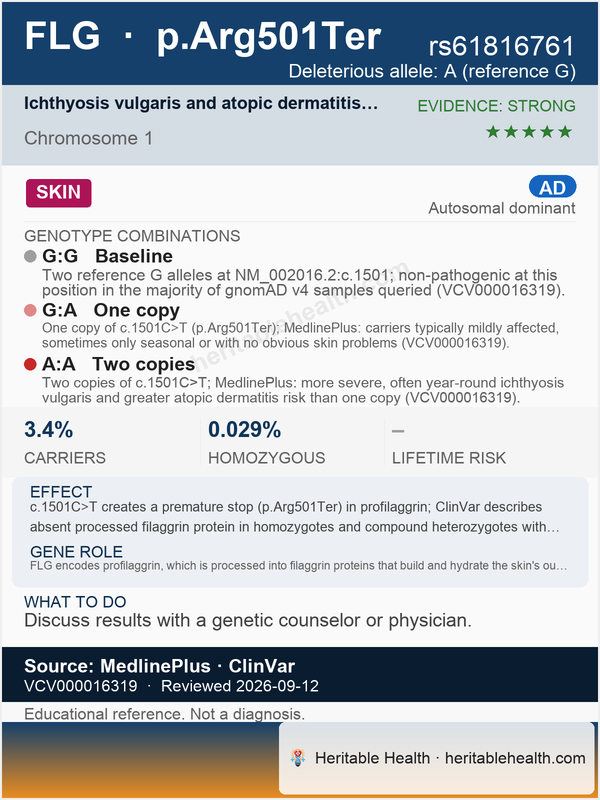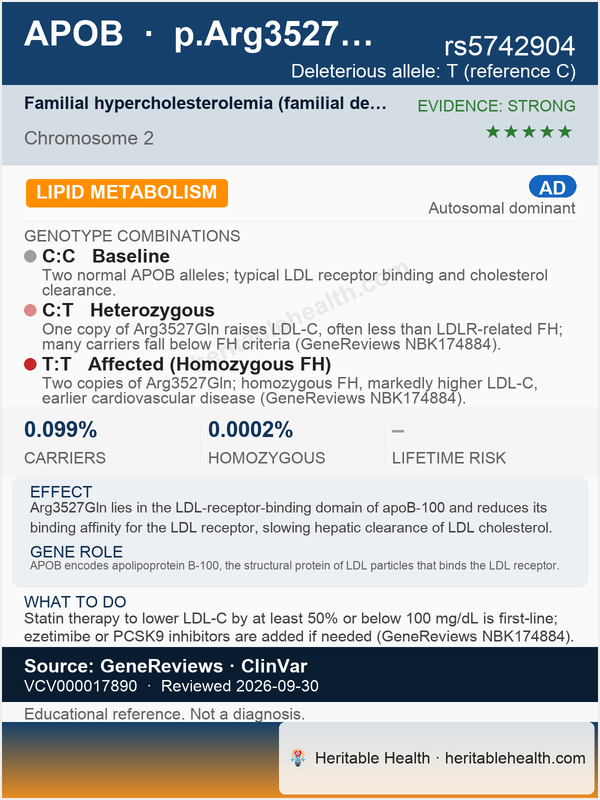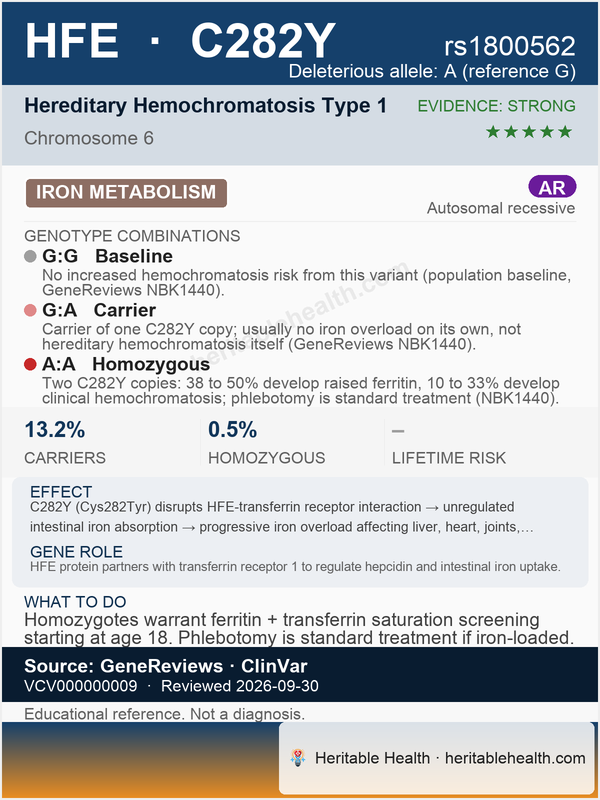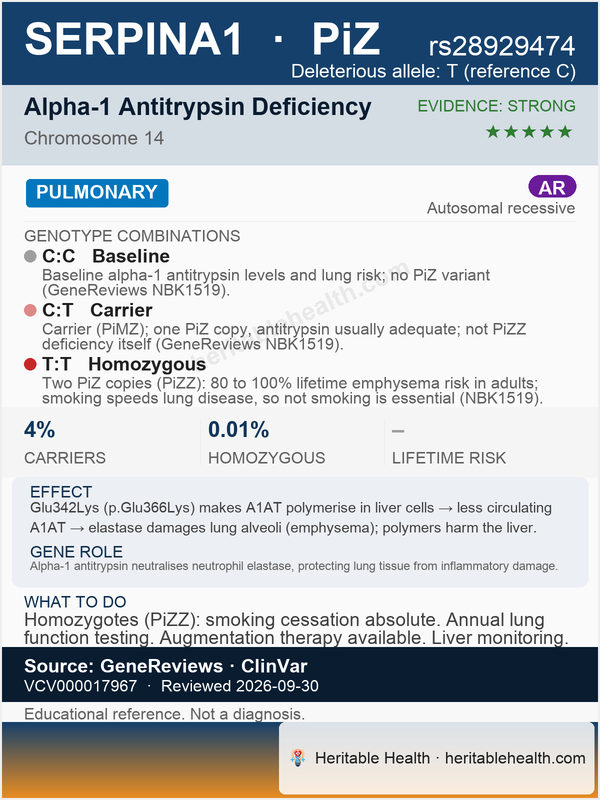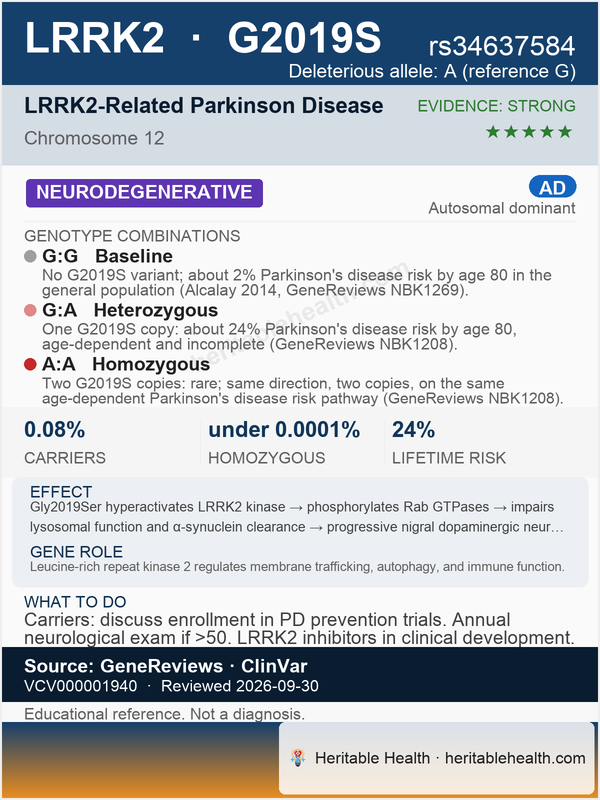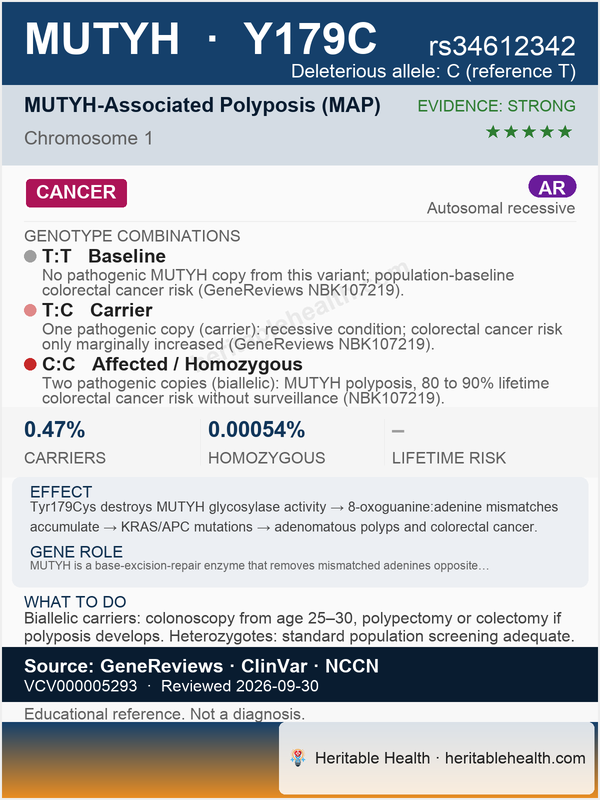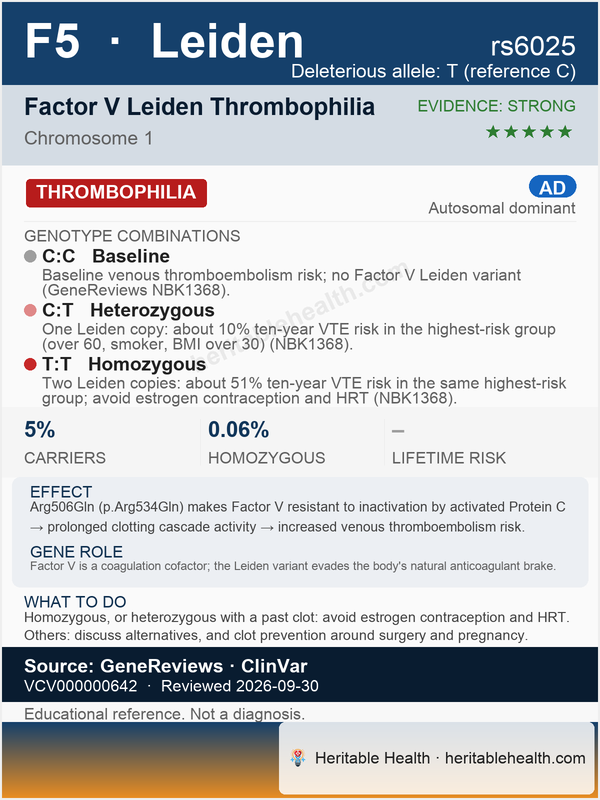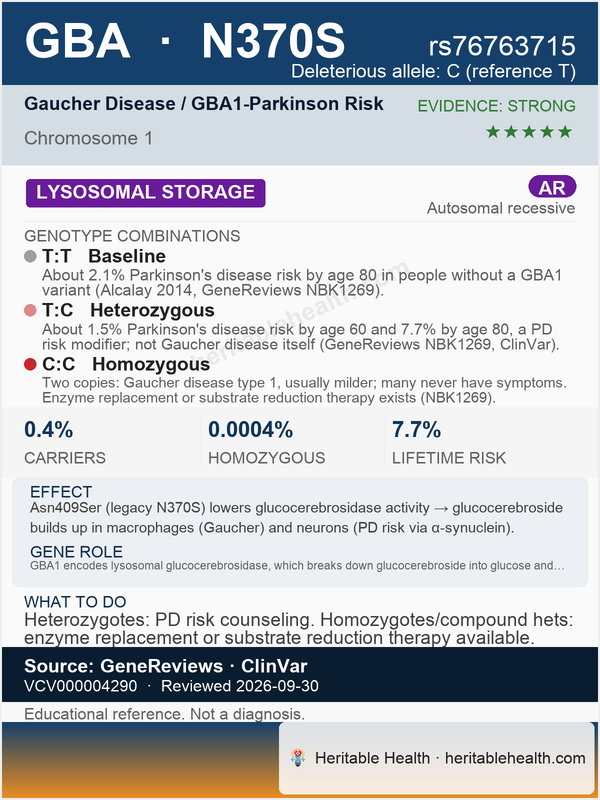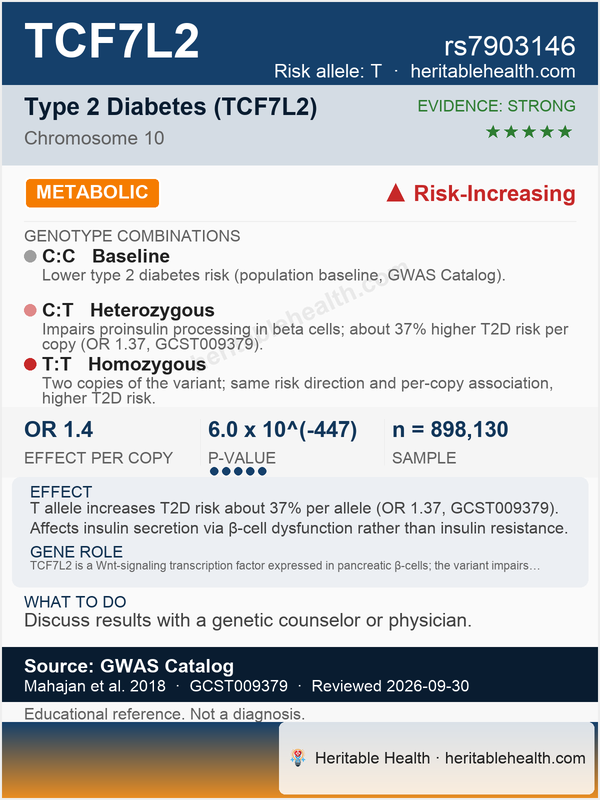
i.
Evidencia clasificada por niveles
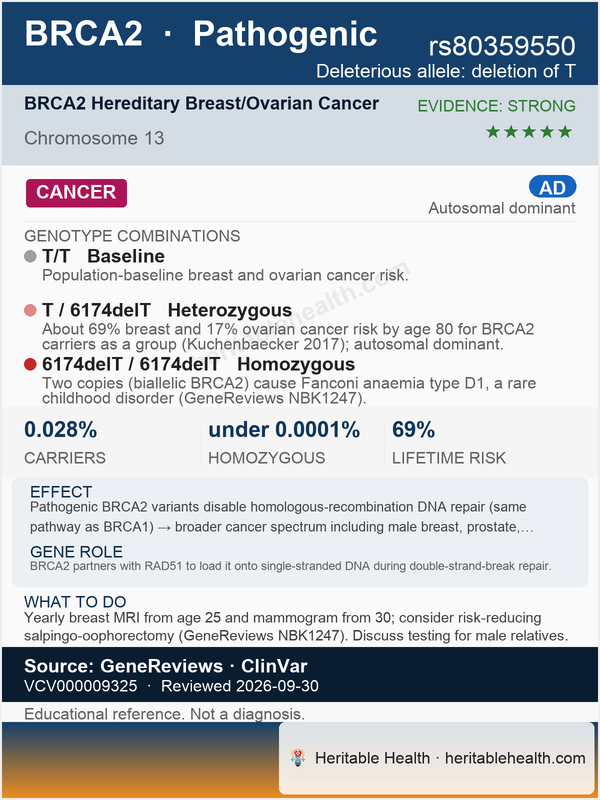
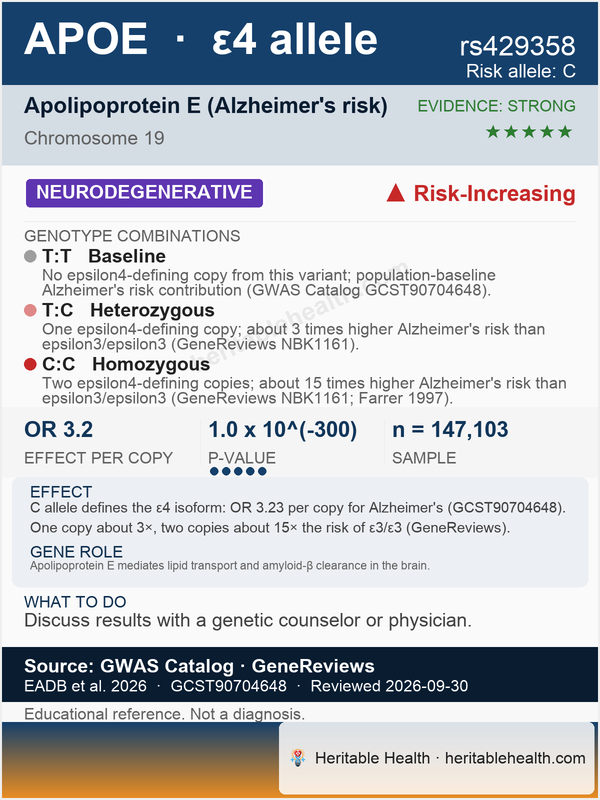
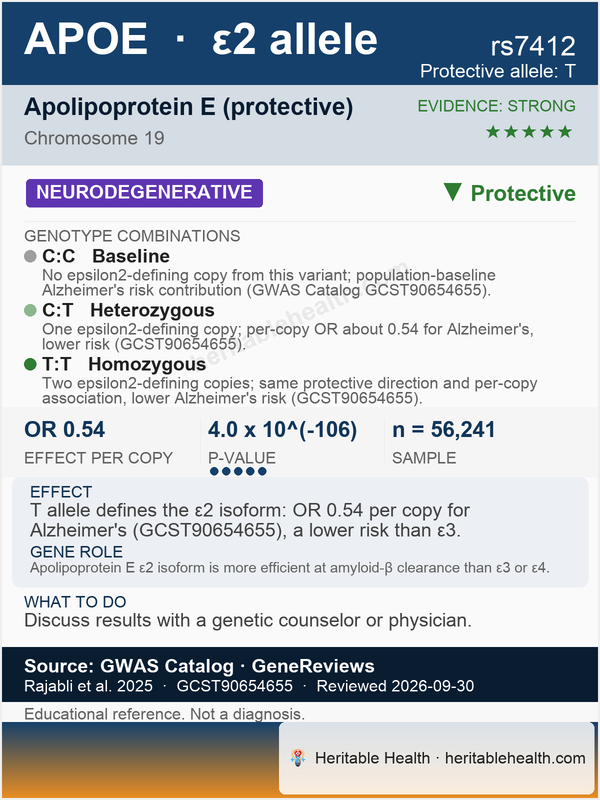
Cada entrada de la biblioteca detalla lo que indica la fuente, el grado de incertidumbre que persiste y lo que la información no puede decirte sobre una persona.
Explora información educativa en un lenguaje claro sobre investigaciones genéticas publicadas. La admisión a sesiones informativas está en pausa y la lista de espera permanece abierta para recibir novedades sobre su disponibilidad.
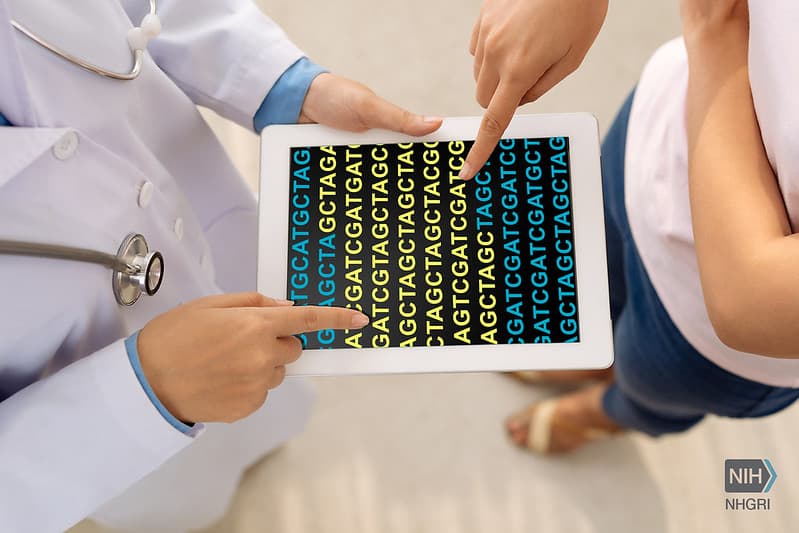
Cada entrada de la biblioteca detalla lo que indica la fuente, el grado de incertidumbre que persiste y lo que la información no puede decirte sobre una persona.
La biblioteca educativa explica los hallazgos publicados y por qué los antecedentes personales y familiares pueden modificar su significado.
Utiliza la biblioteca para preparar preguntas para un profesional de la salud calificado sobre la información que ya está en tu informe.
Puedes ver qué aspectos respalda una fuente, cuáles siguen siendo inciertos y qué conclusiones no pueden obtenerse a partir de un solo hallazgo.
Los reportes genéticos directos al consumidor pueden ser difíciles de interpretar por sí solos. Los antecedentes personales y familiares pueden cambiar el significado de un hallazgo, así que consulta cualquier duda sobre tu reporte con un profesional de la salud calificado.
Una conversación con un profesional de la salud calificado puede aportar contexto y ayudarte a evitar considerar un solo resultado como una respuesta definitiva.
Si un reporte genera una preocupación sobre tu salud, lleva el reporte original a un profesional de la salud calificado. Ellos podrán determinar qué otra información puede ser relevante según tus circunstancias.
La biblioteca de Heritable Health resume investigaciones publicadas para que puedas preparar preguntas sobre un informe previo. No ofrece asesoramiento médico personalizado.
Si algo en un reporte te preocupa, consulta el reporte original con un profesional de la salud calificado que pueda evaluarlo junto con tus antecedentes personales y familiares.
Una breve selección de artículos informativos con enlaces a las fuentes, notas sobre incertidumbre y preguntas para reflexionar.
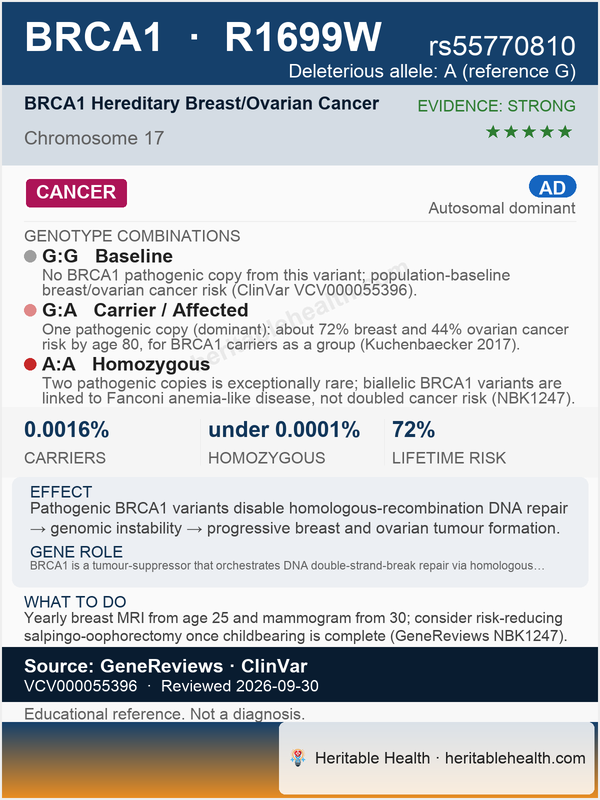
We know this genomic information can be heavy, so we have gathered some news articles that might brighten your day, feel free to visit Buenas noticias felices Y y Noticias de genomas for the best and brightest news articles we could find today.
Únete a la lista de espera para recibir novedades cuando las sesiones informativas basadas en reportes acepten nuevos miembros. La biblioteca educativa sigue disponible.
Únete a la lista de esperaExplora la biblioteca educativa y anota los temas que quieras entender.
Únete a la lista de espera para recibir novedades sobre sesiones informativas basadas en reportes genéticos existentes.
Si se abre la admisión de sesiones informativas en tu región, te explicaremos los siguientes pasos antes de que compartas cualquier reporte.
Heritable Health está desarrollando sesiones informativas en un lenguaje claro a partir de reportes genéticos que los miembros ya tienen. El servicio aún no admite nuevas solicitudes.
La recepción de nuevos informes está pausada. Únete a la lista de espera para recibir actualizaciones de disponibilidad.
El envío de nuevos reportes está pausado. La biblioteca educativa sigue disponible sin necesidad de subir archivos, y los formatos aceptados se publicarán antes de que se abra la recepción.
Nuestra política de privacidad explica cómo se almacena, utiliza y comparte la información genética.
Lleva el informe original con un profesional de la salud calificado para que pueda evaluarlo junto con tus antecedentes personales y familiares. La disponibilidad y los costos varían según la ubicación y el especialista con quien te comuniques.
Si se abre la admisión de sesiones informativas, te explicaremos cómo funciona el servicio antes de que compartas cualquier información.
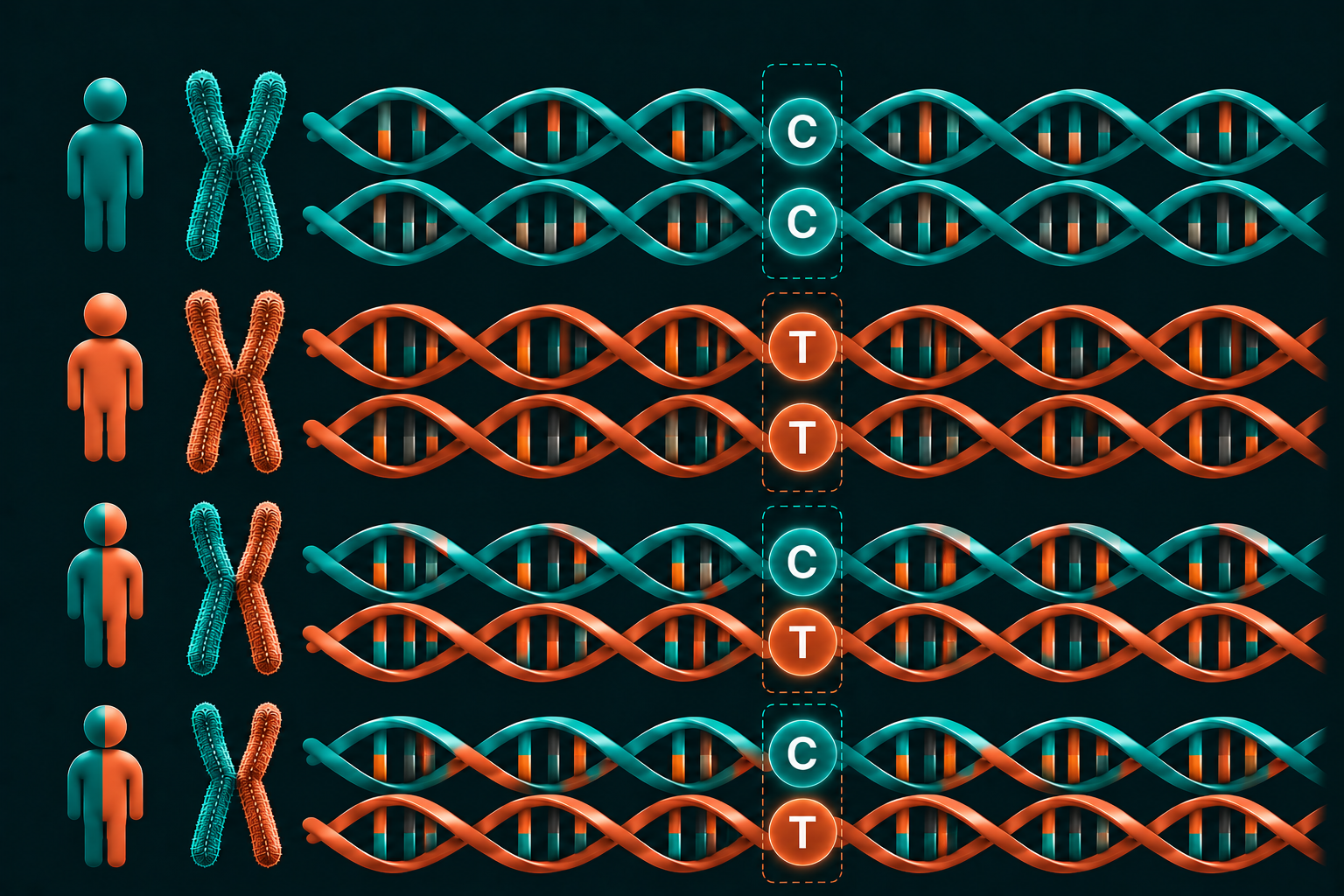
Las personas comparten la mayor parte de su ADN, con pequeñas diferencias entre unas y otras. Los investigadores estudian estas variaciones para conocer los rasgos hereditarios, pero una sola diferencia no brinda un panorama completo de la salud de una persona.
Un polimorfismo de nucleótido simple, a menudo abreviado como SNP, es una variación en una posición específica del ADN. Los investigadores analizan patrones a través de muchas de estas diferencias; un solo SNP no determina la salud de una persona.